Welcome

McMurry’s Biology and Biochemistry programs give students a connected view of life science, chemistry, health, and the environment. Students can pursue field-based ecological study, biomedical preparation, environmental science, life science education, or molecular-level biochemistry.

Across the combined experience, faculty emphasize discovery, hands-on laboratory and field work, research design, data analysis, scientific communication, and professional preparation for careers or advanced degrees in health professions, life sciences, education, research, environmental work, and industry.

Areas of Study

Choose an academic pathway that connects your interests in life, health, the environment, chemistry, and scientific discovery.

A molecular and chemical life-science pathway focused on proteins, nucleic acids, lipids, carbohydrates, living cells, biosynthesis, metabolism, and the science of matter and energy. Biochemistry can support careers in healthcare, life sciences, business, government, education, and law.
A field-based and ecologically focused path for students interested in wildlife, nature, veterinary preparation, advanced biological study, and environmentally focused careers. Students complete an internship or original research project and may pursue the Bachelor of Science or minor.
A practical path focused on biology, geology, chemistry, ecosystems, environmental assessment, remediation, and management. Students complete a capstone research or internship experience.
A broad life-science curriculum with human, animal, plant, microbe, molecular, genetic, physiological, and ecological components. When paired with curriculum and instruction, this pathway can prepare students for biology teaching.

Advanced Degree Pathways

Move confidently from undergraduate science coursework into professional school, graduate study, or allied health programs.

McMurry to Parker University 3+3 Program

Accepted students enter the doctoral program after their junior year, and first-year professional courses transfer back to complete the undergraduate degree.

McMurry to Texas Chiropractic College 3+3 Program

Accepted students receive early admission and transfer courses back to complete their McMurry Bachelor of Science.

McMurry to UT Health San Antonio School of Dentistry DEAP 3+4

Pre-dentistry students apply during freshman year. Accepted students complete three years at McMurry and enter dental school; after the first year of dental school, they receive their Bachelor of Science in biology, biochemistry, or biomedical science.

McMurry to Texas Tech University Health Sciences Center Jerry H. Hodge School of Pharmacy 3+4

Accepted students enter the Doctor of Pharmacy program after junior year, and pharmacy school coursework counts toward the McMurry Bachelor of Science in biochemistry or biomedical science.

McMurry to Hardin-Simmons University Doctor of Physical Therapy 3+3

Accepted students enter the DPT program after junior year, with physical therapy coursework also counting toward the McMurry undergraduate degree.

Cisco College

McMurry encourages community college transfer into biology-related programs, including an articulation connection between Cisco College biotechnology and McMurry biomedical science.

Student Opportunities

Get involved through clubs, honors, pre-professional advising, research, scholarships, and global learning opportunities.

Curricular advising and career guidance help students prepare for application to professional school programs in healthcare and related fields.
The Biology Club brings together students interested in biology and biomedical sciences through fundraisers, camp-outs, trash pickups, and community-building events.
McMurry has an active chapter of the American Chemical Society, known locally as the Chemistry Club, with tutoring, chemistry shows, preview days, field trips, and guest speakers.
ACS
Students engage in discovery through course-based projects, faculty research, summer research, laboratory assistantships, original research, internships, and capstone experiences.
Students can pursue scholarship, research, and honors opportunities through the Brady Cox Endowment, departmental awards, TriBeta, and related academic recognition programs.
The Global Learning Endorsement helps students document achievement in global and international studies on their transcript.
Scientific Instruments and Equipment

Students gain hands-on experience using professional laboratory instruments and research equipment. Select an instrument below to view a larger image.

SpectrofluorometerShimadzu RF-5301PC

Computer-driven system with a Neslab RTE-100 cooler/heater circulator for cell temperature control.

View instrument

Nuclear Magnetic Resonance SpectrometerAnasazi Eft-60

Operates at approximately 60 MHz using a permanent magnet.

View instrument

Fourier Transform Infrared SpectrometerNicolet iS5

Features ATR capabilities for analyzing solid and liquid samples.

View instrument

Ultraviolet-Visible Absorption SpectrometerBeckman DU 7400

Equipped with a diode array detector and a multi-sampler.

View instrument

Electroanalytical ApparatusCyclic voltammetry and more

Includes a controlled-growth mercury electrode and cell stand for electrochemical measurements.

View instrument

Gas Chromatograph Mass SpectrometerShimadzu GCMS QP 2020 NX
Super Speed CentrifugeHermle Z36 HK refrigerated centrifuge

Maximum centrifugal force of 64,000 × g.

View instrument

Biological Sterile HoodFisher-Hamilton

Class II, Type A biological safety hood.

View instrument

Automated Flash Column ChromatographyCombiFlash® NextGen 100
UV-Visible SpectrophotometerAbsorption UV-visible

Equipped with biotechnology programming.

View instrument

Scanning Electron MicroscopePhenom XL G2 Desktop SEM

Beyond McMurry

Prepare for careers and advanced study in health, research, education, environmental work, industry, and beyond.

Careers

An undergraduate education in biology or biochemistry can support careers and advanced study across health, research, education, environmental, analytical, and industry settings.
  • Allied Health
  • Bioinformatics
  • Biotechnology
  • Commercial Lab Work
  • Ecology
  • Environmental Assessment
  • Environmental Management
  • Forensic Science
  • Genetics & Genomics
  • Healthcare
  • Industrial Chemical Research
  • Medicine
  • Microbiology
  • Pharmacy
  • Pollution Control & Remediation
  • Quality Assurance
  • Science Education
  • Toxicology
  • Veterinary Medicine
  • Wildlife Research

Join the Ranks of Accomplished Alumni

Biology and biochemistry alumni move into dentistry, medicine, pharmacy, research science, forensic chemistry, computational biology, education, oil and gas, semiconductors, environmental remediation, hospital administration, and additional health professions.
  • Computational Biology
  • Dentistry & Medicine
  • Forensic Chemistry
  • Government Service
  • Hospital Administration
  • Nuclear Energy
  • Oil & Gas
  • Pharmacy
  • Research Science
  • Semiconductors
  • Science Education
  • Zoos & Wildlife Management

Resources

The Science and Mathematics Advisory Board advises, sponsors educational projects, helps recruit students, supports teaching and learning, celebrates alumni success, and helps generate resources for science and mathematics programs.

Faculty in biology, chemistry, biochemistry, organic chemistry, inorganic chemistry, chemical education, and related areas create opportunities for undergraduates to contribute to academic and laboratory research.
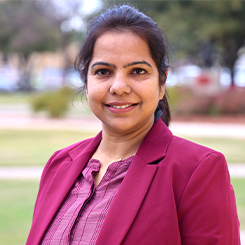
Faculty and Staff

Dr.
Terrence Boyle Department Chair and Assistant Professor of Biology
Dr.
Bhavana Gangwar Assistant Professor of Biology
Biology
Dr.
Santosh Kumar Assistant Professor of Biology
Santosh Kumar's Lab
Dr.
Olivia Thibault Assistant Professor of Biology
Dr.
Anna Saghatelyan Professor of Biology
Mr.
Jay Packer Instructor for the Department of Biology
Dr.
Edward Donnay Professor of Inorganic Chemistry
Dr.
Paul Pyenta Professor of Biochemistry
Dr.
Pamela Veltkamp Professor of Analytical Chemistry